REALMRISK — pioneering the next decades of infrastructure resilience.
A deeptech company, born at IIT Roorkee, building the computational intelligence layer for aging civil infrastructure — through high-fidelity simulation, physics-informed AI, and life-cycle decision support.
Leadership
People behind RealmRisk
03
Prof. Yogendra SinghNon-Executive Chairman
"Resilience is not a luxury, it is the quiet contract a society writes with its own future."
Tajul IslamFounder & CEO
"We're not building one tool. We're building the computational backbone that the next decades of infrastructure will run on."
Advisory BoardGovernance & Strategy
"A standing panel of academic and industry experts safeguarding the scientific integrity of every model we ship — currently being constituted."
Our Vision
A world where the resilience of every aging structure is as knowable as the day it was designed — where infrastructure decisions are guided by physics, intelligence, and evidence, not assumption or delay.
Our Mission
To build the computational backbone of the global retrofitting economy — automating structural health assessment, life-cycle cost evaluation, and carbon accounting through a unified ecosystem of professional-grade simulation and physics-informed AI.
A unified platform that doesn't just model geometry but simulates life.
Our Life-Cycle Seismic Risk & Sustainability Assessment (LCSRSA) engine predicts economic and carbon costs for the next 50+ years.
Suggests optimal intervention (e.g., "Patch at Year 10, Jacket at Year 20").
Generates Carbon Premium Reports.
2. REALM AI Lab
Breaking the "Paper Model" Cycle.
An Open Access Digital Twin ecosystem. We take efficient algorithms from academic papers and deploy them as live, accessible APIs for the industry.
The Real-Time Loop
Digital Twin (Site Data)
Auto-Update Properties
REOS Simulation Engine
Predict & Optimize
Strategic Intervention
CHAIRMAN'S MESSAGE
On Building What Outlasts Us
Prof. Yogendra Singh
Non-Executive Chairman, RealmRisk NG Pvt Ltd
Indian Railway Bridge Chair Professor · Department of Earthquake Engineering · IIT Roorkee
"Resilience is not a luxury — it is the quiet contract a society writes with its own future."
For more than three decades, I have worked on the seismic safety of bridges, masonry buildings, and the structures that hold up everyday Indian life — at the intersection of research and the realities of the field. In all that time, one observation has persisted: the gap between what advanced structural science can do, and what practising engineers can actually access on a project, has remained stubbornly wide.
RealmRisk exists to close that gap. Performance-based seismic design, nonlinear time-history analysis, retrofit decision-making under uncertainty — these are no longer frontier topics. They are the minimum standard the next decades of infrastructure deserves. The question has never been the science. The question has been: how do we put that science into the hands of every engineer who needs it, in a form they can actually use?
What this team is building — REOS, the AI Lab, and an honest body of consultancy work to keep the platform anchored to reality — is the most credible answer to that question I have seen come out of India. My role, as Non-Executive Chairman, is to safeguard the scientific integrity of what is being built, and to ensure RealmRisk remains a place where deep engineering work is done patiently and well.
Infrastructure resilience is a long horizon. We are building for it accordingly.
Prof. Yogendra SinghNON-EXECUTIVE CHAIRMAN · REALMRISK NG PVT LTD
FOUNDER'S MESSAGE
Why We Built This
Tajul Islam
Founder & CEO, RealmRisk NG Pvt Ltd
IIT Roorkee · Department of Earthquake Engineering
"We are not building one tool. We are building the computational backbone the next decades of infrastructure will run on."
RealmRisk began with a simple, uncomfortable question I kept running into at IIT Roorkee: why is the most powerful structural simulation in the world still locked behind hand-written Tcl scripts and a steep learning curve, when entire economies depend on the answers it produces?
Worldwide, we now spend over $2.6 trillion every year just keeping aging infrastructure standing. Most of that spend is allocated on the basis of visual inspections, spreadsheets, and engineering judgement stretched across portfolios too vast to comprehend. India is about to enter the same reckoning the United States and Europe are facing today — with one of the largest infrastructure portfolio in human history, and one chance to be ready before it arrives.
The science to do better already exists. What's missing is the platform — software that an engineer can actually use, calibrated against real physics, surfacing decisions an engineer can defend. That is exactly what we are building. REOS™ and the REALM AI Lab form the foundation of this vision. We are building, deliberately and patiently, toward an end-to-end digital-twin ecosystem.
If you are a researcher, an asset owner, or an engineer who has felt this same frustration — we would like to hear from you. There is a great deal of work ahead, and the right hands matter more than anything else.
Tajul IslamFOUNDER & CEO · REALMRISK NG PVT LTD
ADVISORY BOARD
Why an Advisory Board?
"Trust is the only currency a deeptech infrastructure company can spend. The Advisory Board is how we earn it — by ensuring that every model, every algorithm, and every recommendation that leaves RealmRisk has been examined by people whose names you already trust."
RealmRisk operates at the intersection of structural physics, artificial intelligence, and the safety of public infrastructure. That is a serious place to operate. Our Advisory Board exists to make sure we stay worthy of operating there.
Objective 1 · The AI Lab Review Jury
Every AI model proposed for deployment in REALM AI Lab passes through a two-stage review before it goes live:
Technical review by an in-house research group of research scholars and AI experts, who interrogate the model's physics fidelity, data lineage, and failure modes.
Jury approval by a panel of professors and domain experts from reputed institutions worldwide — drawn from the Advisory Board — whose verdict determines whether the model is released.
We are currently inviting professors and researchers to join this committee. Apply here →
Objective 2 · The Structural Engineering Trust Panel
The second arm of the Board is a standing panel of industry veterans and senior academics in:
Performance-based seismic design
Retrofitting of aging RC, steel, and masonry structures
Structural dynamics and earthquake engineering at large
Their role is to ensure our consultancy work and product roadmap remain anchored in the realities of practice. When we are asked to weigh in on a difficult engineering judgement — a heritage retrofit, a portfolio-scale risk question, an unconventional damping system — we have a panel of senior experts we can convene.
Governance principles
Independence. Board members are non-executive. They are compensated for their expertise, not their conclusions.
Transparency. Every reviewed model carries a public, citable jury record — identifying which experts approved it and on what basis.
Scientific primacy. If a model fails the jury, it fails. There is no commercial override.
Join the Advisory Board
We are actively constituting both arms of the Board. If you are a senior academic, industry expert, or AI researcher whose work intersects with structural resilience — we would be honoured to hear from you.
Engineering the Future of Structural Resilience with AI & Digital Twins
A closed-loop ecosystem at the intersection of industry and academia — uniting high-fidelity OpenSees simulation, physics-informed AI, and expert consultancy to build the computational backbone of the global retrofitting economy.
Flagship Platform
REOS™ Software
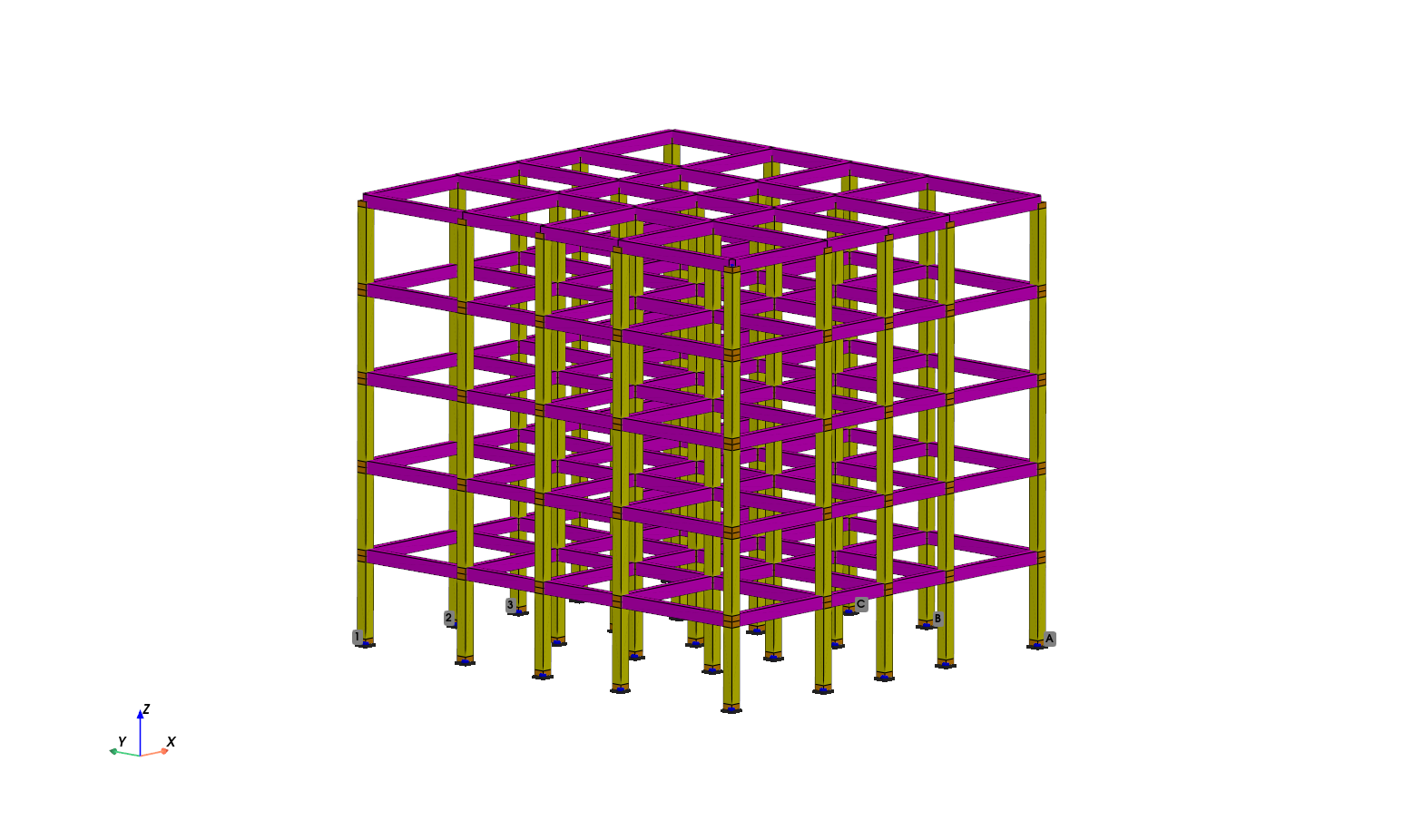
A professional-grade OpenSees workbench for nonlinear structural simulation.
Built so that engineers can see, in vivid detail, exactly how a structure will behave under earthquake, blast, fatigue, or decades of slow decay — and act on it.
Story-Based Modeling: Streamlined assembly of complex nonlinear RC & steel structures of any scale.
Unified Analytical Orchestration: Pushover, time-history, modal & quasi-static analyses in a single interface.
Seismic Risk Assessment: IDA and MSA workflows that compress days of work into minutes.
Smart Material Calibration: Physics-informed calibration with extreme precision.
Seismic Retrofitting: Integrated assessment tools across performance and cost.
Life-Cycle & Sustainability Suite: Whole-of-life cost and carbon assessment.
AI Plugins: Integrate validated AI models through a clean API.
Robust Post-processing: Fiber-level result investigation and animated response mapping.
The research engine that turns peer-reviewed structural science into live, accessible technology — closing the gap between academic insight and industry practice.
Physics-Informed AI: Embedding first-principles structural physics into deep learning through OpenSees.
Smart Vision Pipeline: Autonomous CNN-based damage detection and quantification.
Open-Access Repository: A global ecosystem for deploying validated structural AI models.
REOS Interoperability: API gateway for seamless cloud-to-client digital twin updates.
Impact Challenge: A global initiative to benchmark and reward open structural AI innovation.